

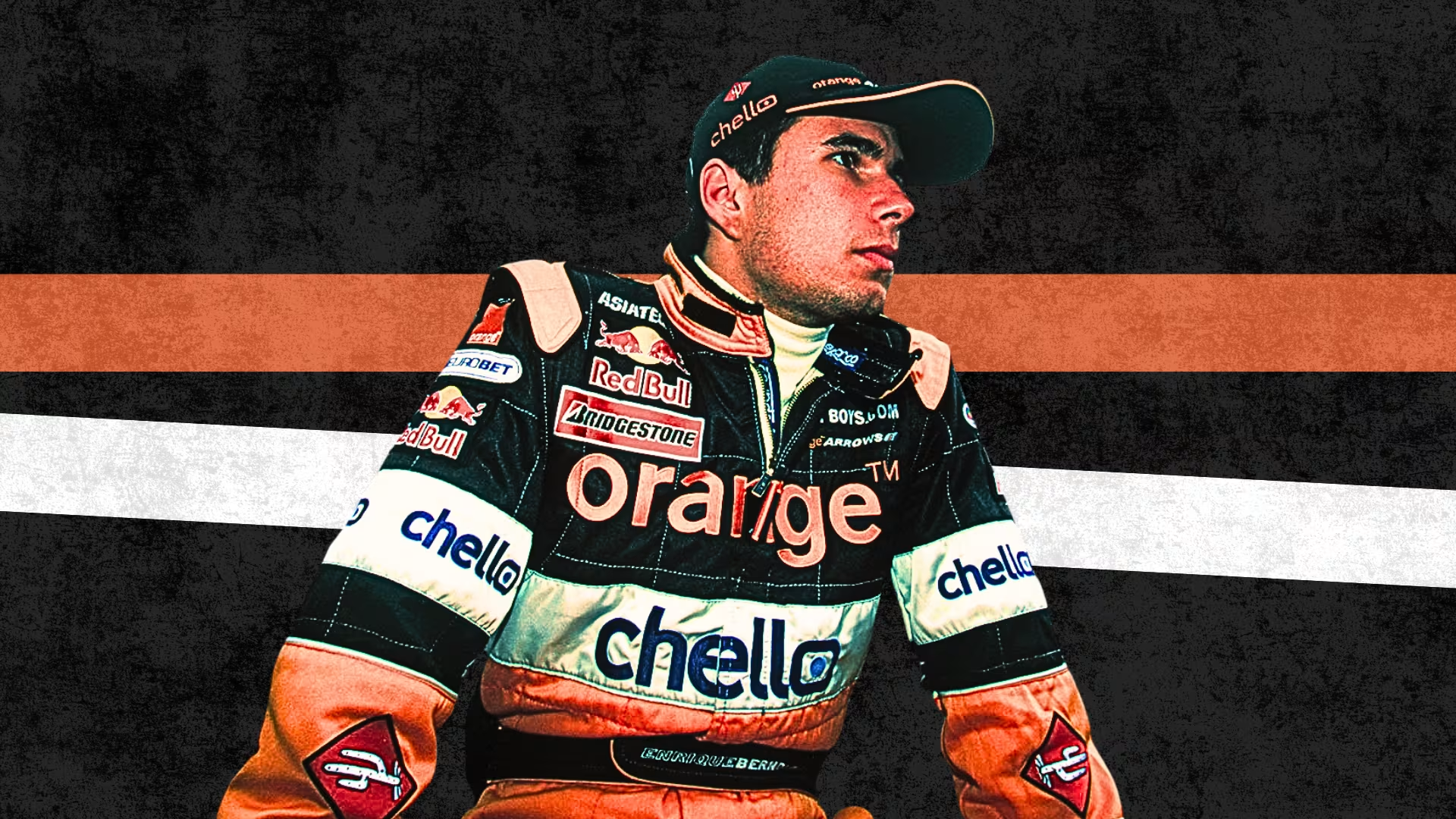
On March 4, 2001, a quartet of drivers arrived on the F1 grid. Two of those, Fernando Alonso and Kimi Raikkonen, would go on to claim the world title in the years to come, while another, Juan Pablo Montoya, achieved several race victories and knocked on the door of a championship triumph himself.
It was a slightly different story for Enrique Bernoldi, “the other rookie” from that campaign, who battled to make his mark in modest Arrows equipment but found himself on the sidelines after just 28 Grand Prix starts.
An interrupted junior journey
Born in Curitiba, Brazil, in 1978, Bernoldi’s first passion was horse riding, only for everything to change when he received a go-kart on his seventh birthday and became obsessed with following in the footsteps of home hero Ayrton Senna.
Having achieved multiple regional and national karting titles across the late-1980s and early-1990s, Europe and competitive single-seater action soon beckoned, with Bernoldi heading to the continent in his mid-teens to take on the Formula Alfa Boxer series and Formula Renault.
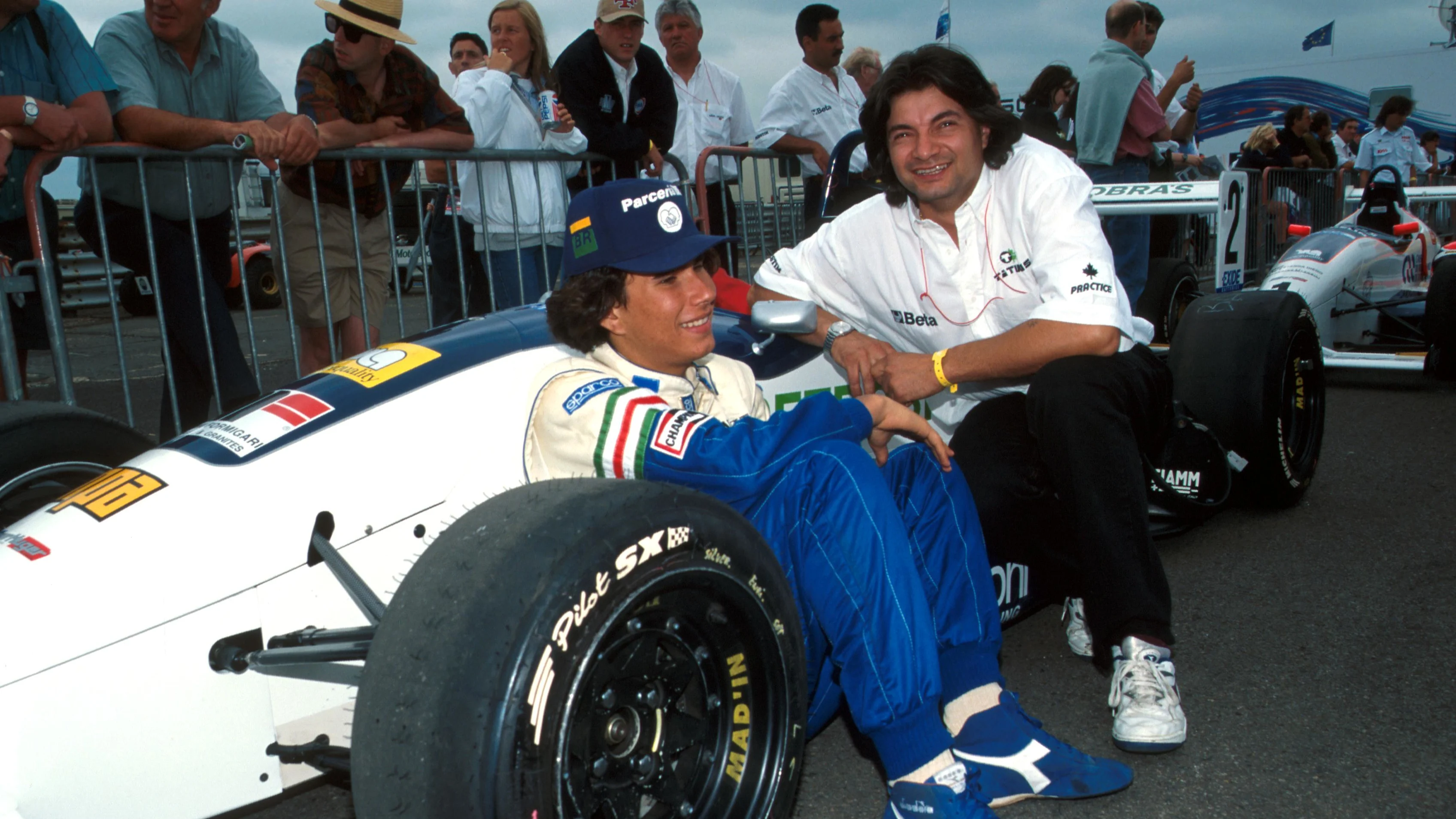 A young Bernoldi charged his way to the 1996 Formula Renault Europe crown
“First of all, it was a big step coming from Brazil,” says Bernoldi, as he rolls back the years. “I was only 16. Nowadays, at 16, you’re quite old to start racing in cars, but at the time, I was actually quite young. So, I came to live in Italy, and things went really, really well straight away.
“I scored pole position for my first ever race, I was winning races, and then I won the Formula Renault Europe title in 1996. Afterwards, I got some offers to race in German Formula 3, and an offer from Renault to be part of their works team in British Formula 3. As British F3 was the strongest category at the time, I decided to do that and move to England.”
One day in early January, 1997, however, Bernoldi’s career was almost over before it had properly started.
“I had a big road car crash,” he says, pausing for thought. “Now, I can say the journey from karting all the way to F1 was in two phases – before my road car crash, where I was in a coma for three days, and after it, when I recovered, came back, and still managed to get to F1. Things were a little bit more difficult after that, and it took me a while to recover.
“I think today, I wouldn’t have been allowed to drive again because of the injuries sustained to my brain. I did an MRI scan three years ago, and I still have a lot of the bruises, the brain bruises, maybe even more because of my further crashes in IndyCar later on, so it is a little bit of a mess inside my brain.
I did an MRI scan three years ago, and I still have a lot of the bruises, so it is a little bit of a mess inside my brain.Enrique Bernoldi
“I never managed to be in the same shape, at the same speed as before – it just didn’t click the way it had been clicking. People who were close to me said I lost some ‘tenths’ there, that I was not the same driver afterwards. I think I was still pretty good, but before, in my view, I was better. I lost something.”
Indeed, after that Formula Renault title success, which included eight pole positions and nine victories from 11 races, Bernoldi had to settle for fifth in the 1997 British F3 Championship, with a sole win from 14 outings.
But the following year, the recovering youngster put together a stronger challenge – particularly in the opening half of the season – to finish second in the standings, while bagging podiums at the prestigious Zandvoort and Macau F3 showpieces.
Red Bull and Marko come knocking
Now in his early-20s, and despite that scary interruption, he was heading to the final stage before F1: International Formula 3000.
“My first option was to join McLaren’s junior team, to be Nick Heidfeld’s team mate,” Bernoldi shares. “I did a test, and I was fastest, but they didn’t take me. I don’t believe it was due to my outright speed, because I finished second in British F3, and I won a lot of races… but I paid a high price for not finishing the races where I didn’t win. After my coma, I was a bit inconsistent – either win or nothing.
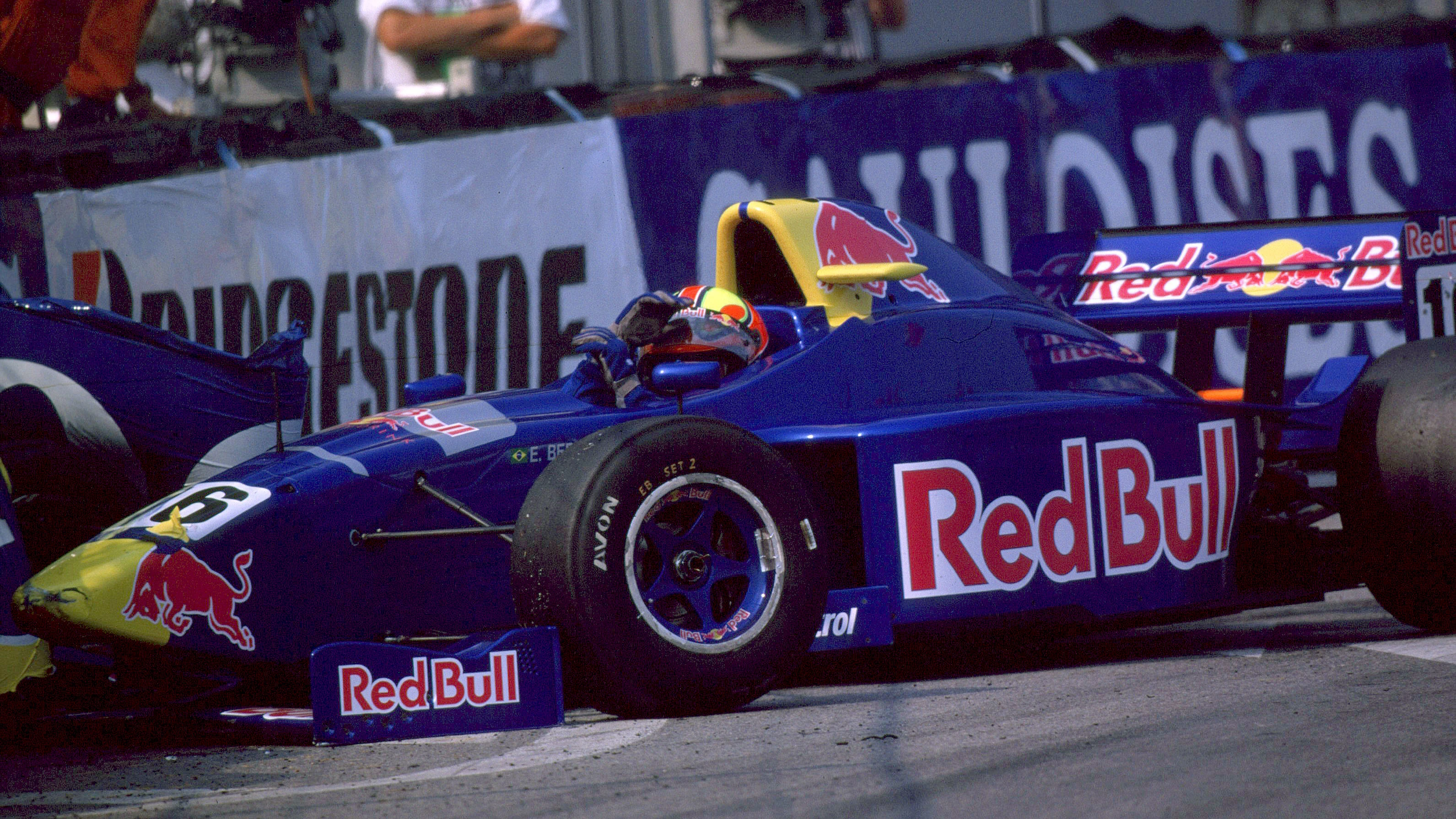 Bernoldi found results hard to come by with Red Bull’s F3000 team
“So, I took an offer from Red Bull instead, and moved again to Austria, which was a completely new experience for me. Helmut Marko was my team boss, and he was quite unique, I would say! The pressure was tremendous from the beginning. I wanted that… I wanted to go to Formula 3000 and fight for the championship – but it was not the case with Red Bull, because the team was not very well organised.
“Helmut also acted as my manager at that point, and I was always at risk of being kicked out of the programme and sent back to Brazil. We failed to do great results in that first F3000 season, so, one day, having lunch with Helmut, I said, ‘You know what, you have the F1 team’, as they were the main shareholders of Sauber at the time, ‘and you have all the references there, so give me a test. If I’m slow, I’ll go back to Brazil. If I’m fast, then it’s our F3000 car, it’s not me’.
“I think the way I said that challenged Helmut. He didn’t really answer with anything at the time, but a few days later he called me and said, ‘Let’s go to Sauber and do a seat fitting. You’re going to do a test day at Magny-Cours – you and Jean Alesi. Trust me, what you said will happen: if you’re not fast, you’ll be packing your bags’.”
Just like that, Bernoldi was en route to the French countryside for the most important day of his motorsport career so far, and if he was not already feeling the pressure while suiting up alongside a Grand Prix legend in Alesi, several Red Bull and Sauber big wigs joined him to watch on.
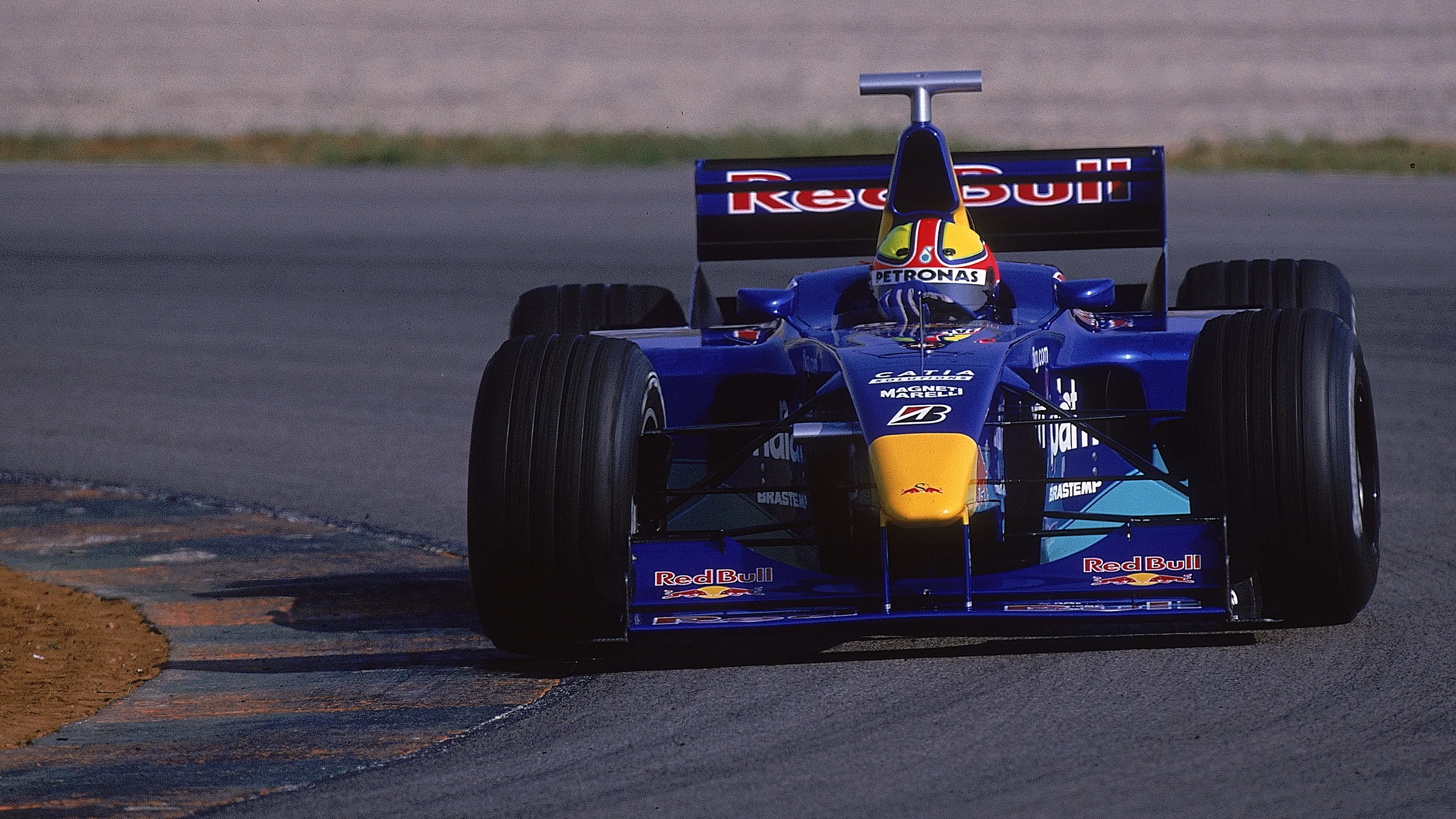 Marko secured an opportunity for Bernoldi to show what he could do in Sauber F1 machinery
“Suddenly, for that test, Helmut went there, Peter Sauber, the team boss, Willy Rampf, the designer of the car, and Dietrich Mateschitz, the boss of Red Bull. I’m sure that was a test by fire for me! Didi would barely attend any F1 races at the time, and he was going to a test at Magny-Cours, in the middle of nowhere…
“I performed well. I was three-tenths off Alesi with the same equipment, with the same fuel load and so on, and two days later I was offered a test driver contract from Sauber for 2000. Helmut then said, ‘I think we need to improve the Formula 3000 team for next year, because it was not your fault’. That’s how everything went.”
On paper, there was not a huge difference between Bernoldi and Red Bull’s fortunes in 2000 compared to 1999, with a fourth place and a pair of top-six finishes from 10 weekends – punctuated by various retirements – enough for only 16th in the standings.
However, given the struggles Red Bull’s F3000 team had been facing, and with further tests in F1 machinery going well, Marko continued to back Bernoldi for a shot at the top echelon – all the signs pointing toward a Sauber drive in 2001 until a young Finn by the name of Kimi Raikkonen entered the frame after just one season in single-seaters.
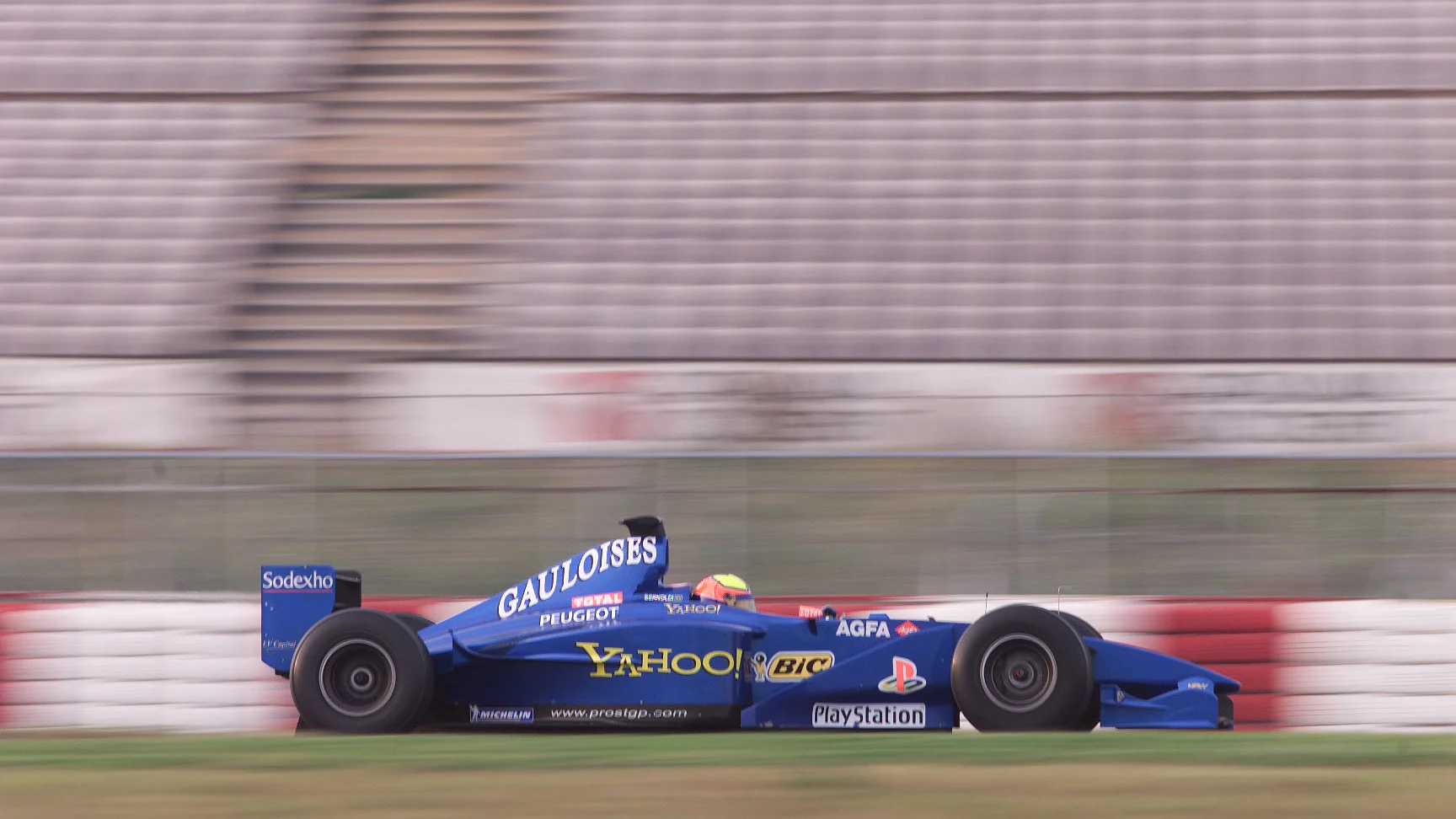 Bernoldi also tested for Prost as his and Marko’s search for an F1 race seat widened
“When I joined Sauber, Helmut said to me, ‘You are our driver, not a Sauber driver. You drive for yourself, you drive to be fast, and your job is to be faster than the official team drivers. If you do that, you are in F1. It doesn’t matter what the team wants you to do, your job is to find a way to be fast’,” Bernoldi recalls.
“I think Sauber realised I wasn’t so much of a team player. There were a lot of discussions between Helmut and Peter Sauber, so I was in the middle of a power war between them. I beat their drivers quite often, quite consistently, during the tests – but somehow, they did not want me, and went for Kimi instead.”
The future is Orange (Arrows)
That potential door to F1 slammed shut, the Marko/Bernoldi partnership had to look elsewhere – a shootout test for Prost and discussions with Minardi almost leading to deals, before one more outfit joined the mix and made it fourth time lucky.
“Helmut ended up speaking with Daniele Audetto, who was the Vice-President of Arrows, and Tom Walkinshaw, the team boss,” says Bernoldi. “Pedro de la Rosa, who was due to drive for them, had backing from Repsol in Spain, and Tom said to Helmut, ‘If you match what Repsol brings to us, we’ll replace him with Enrique’. It’s not a nice situation, and not nice to say, because Pedro is a friend of mine, but that’s how it is. F1 is hard, and sometimes it’s cruel.
“For me to reach F1 after everything that had happened during the journey… I believe you have to be chosen, in a way. When you’re born, I think it almost has to be in your destiny. When I made it to F1 and lined up on the grid in Australia, it was a very emotional moment, for sure.”
Those emotions were clear to see when Bernoldi posed for photographs alongside Sauber’s Raikkonen, Minardi’s Fernando Alonso and Williams’ Juan Pablo Montoya in the build-up to the Grand Prix – all four aiming to prove themselves and kick off lengthy F1 careers.
“When I look at the picture now, I think, ‘Woah, how young I was!’ I had more hair, also!” Bernoldi laughs. “I knew all three of them, but at the time I think drivers were a little less friendly with each other. Instagram didn’t exist, so it was unusual for drivers to be hanging out or going out together, stuff like that – at least in my case.
“Anyway, it was a special day for me, and that picture is a very nice memory, even if it gives me a little bit of a bitter taste, because I crashed and didn’t finish the race… I was fighting with Kimi in the early stages of the race, for a position and for the car that Marko said should have been mine, so I think I took the fight on a little bit of a personal level.
“It was not the best way to start my F1 career. I felt disappointed to spoil such a nice day after so many years of fighting, sacrifices and dedication. But it’s still a big achievement, the biggest achievement of my life, and everything that I dreamed of.”
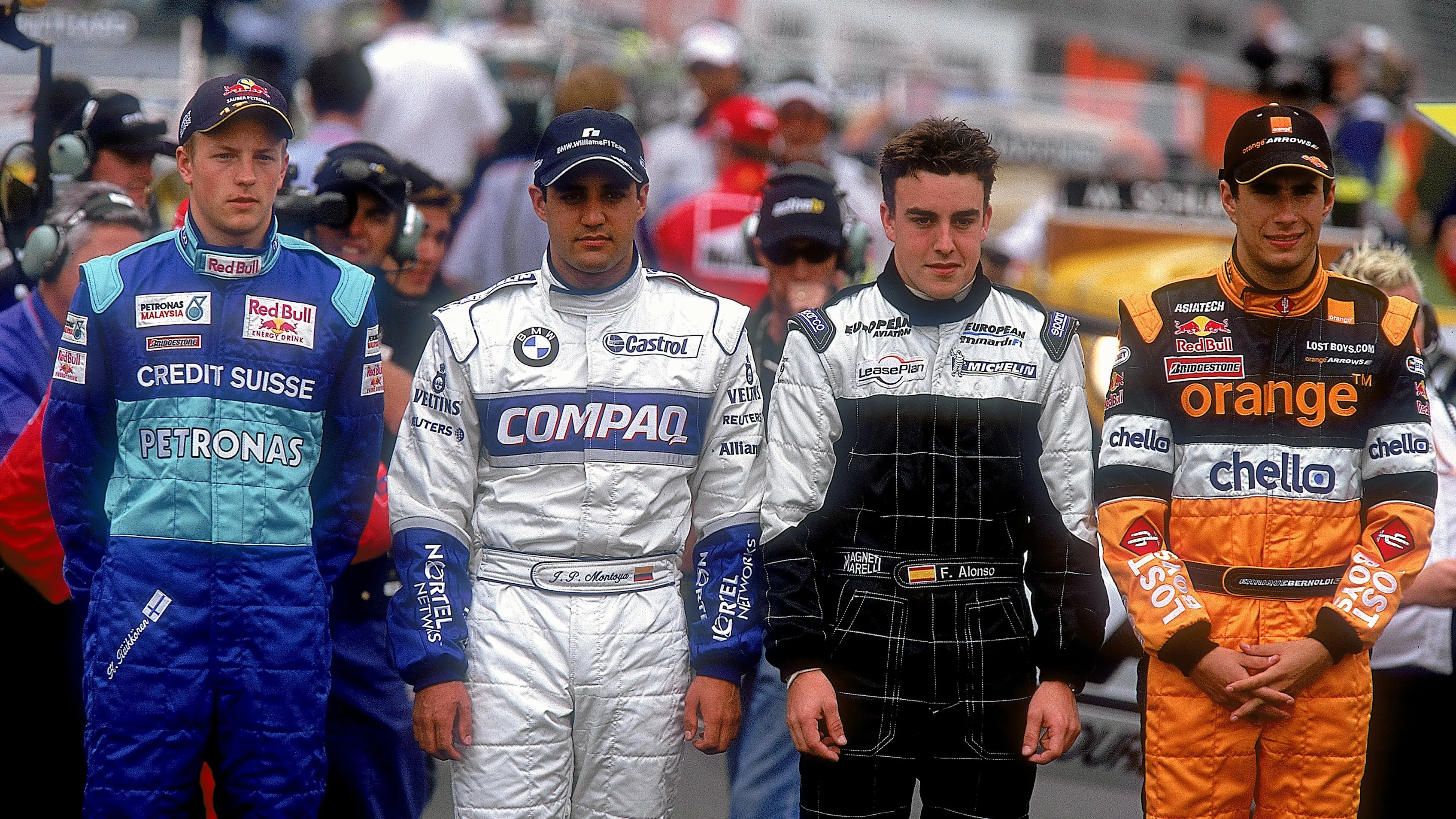 Left to right: Raikkonen, Montoya, Alonso and Bernoldi ahead of their F1 debuts
Making headlines in Monaco
Bernoldi’s retirement in Australia was the first of many across his rookie season amid various technical problems for the Arrows A22, which also featured an unusually small fuel tank – a feature designed to capitalise on the tyre war between Bridgestone and Michelin that the team thought would bring higher degradation levels and more pit stops.
Under F1’s current system, Bernoldi would have scored points via top-10 finishes in San Marino, Monaco and Germany, with his performance on the streets of Monte Carlo attracting plenty of attention thanks to how he held up McLaren’s David Coulthard – who had claimed pole position but stalled on the grid and dropped to the back – for some 40 laps.
“Everybody says I became famous in Monaco,” Bernoldi comments with another chuckle. “You could see the difference in speed between him and his car, and me and my car, but what I take from it is I drove a very difficult car, under such pressure, without making a mistake.
“It was a difficult race, with no power steering for me, and it was hot… I lost the drinks bottle on the formation lap, because I touched the tube with my tongue and it ended up coming out of the helmet, so I could not drink at all. It was not an easy situation, but it was a good race.”
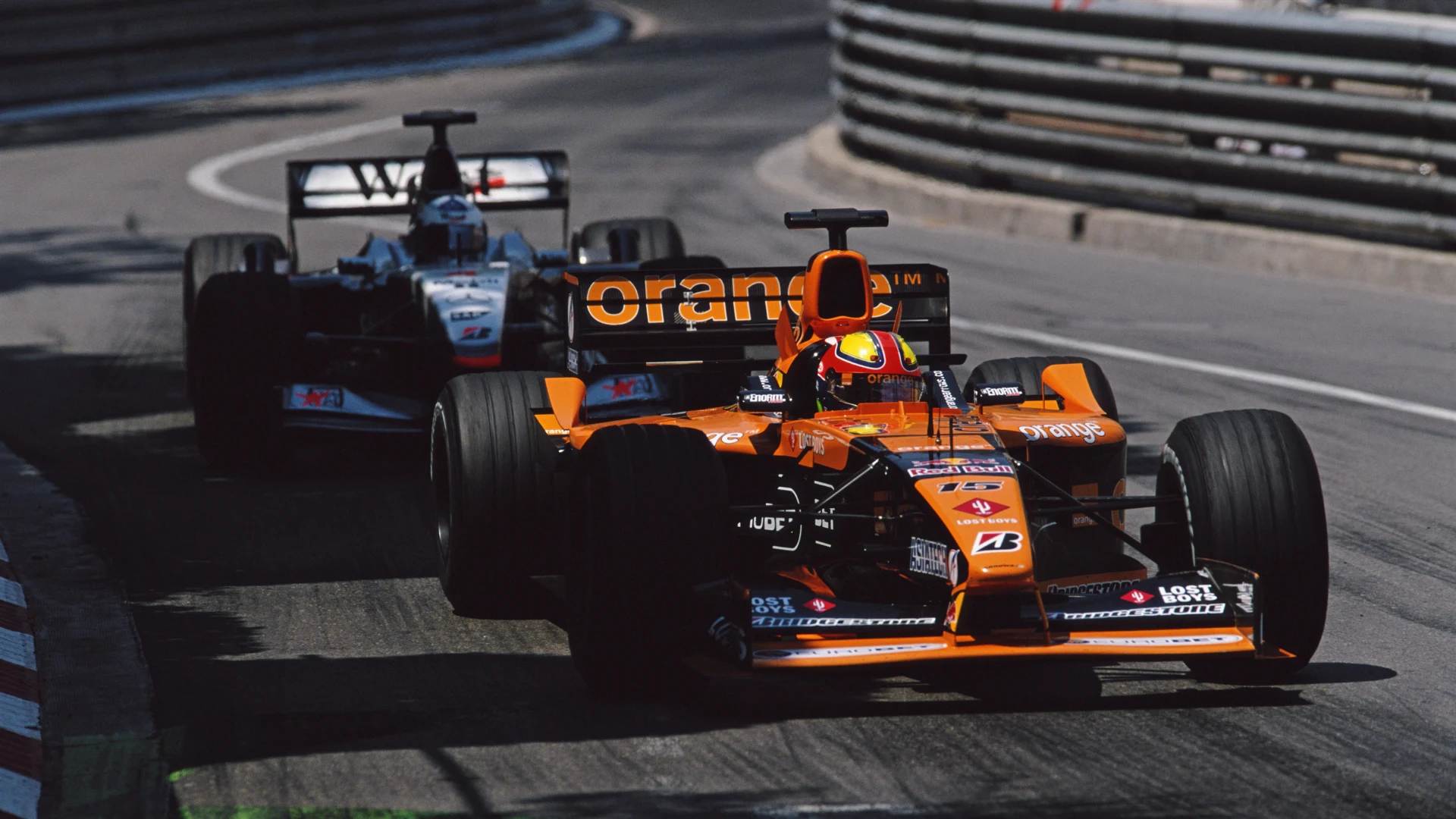 Bernoldi made life difficult for Coulthard during the Monaco Grand Prix
He continues: “A lot of people say, ‘In Monaco nobody passes’, but the following year I overtook Felipe Massa in the Sauber around the outside out of the final corner, driving quite a similar car. So, one time it’s, ‘Okay, Enrique can hold DC up because the track helps’. But what about when I passed somebody in a similar car to mine, where it’s almost impossible to pass?
“These are the same people who say in 2001, from the rookies, there were three drivers and ‘the other one’. I have seen these comments, too. At the end of the day, it’s difficult when you drive a car like the Arrows that year to be seen, to be appreciated and to please anyone. The fight ends up being with your team mate.”
A fight to stay on the grid
Talking of team mates, Bernoldi spent his rookie season alongside the experienced Jos Verstappen, who started out in F1 alongside Michael Schumacher at Benetton in 1994 and went on to represent several other squads.
An interesting dynamic developed, with the younger Bernoldi giving Verstappen a run for his money in Qualifying sessions, but the older Dutchman finishing ahead in every race they both finished apart from the German and Japanese Grands Prix.
“To be honest, at the time I didn’t have a great relationship with Jos,” Bernoldi admits. “Arrows wasn’t a bad team, but that year the car wasn’t great, so we struggled, and chances were very limited. Once you’re driving a car like that, you’re constantly fighting against your team mate, because sometimes it’s the only way to show what you can do.
“I could also see that when Jos brought Max to the track, he was looking at me with the eye of a tiger. Given that me and Jos were fighting quite a lot, maybe when Max listened at home there was not so much good stuff said! I thought it was funny – the little boy with the spiky hair at that time.
“Max actually got stuck in our toilet at one race. We were in the motorhome, with one bathroom between my room and Jos’ room, and I could hear some noises. I opened the door and Max was stuck, so I helped him get out and gave him to Sophie, his mum. It was one of the interesting episodes, but at the rest of the races he behaved!”
Bernoldi and Verstappen continued their battle into the final rounds of 2001, which proved decisive in earning the newcomer another campaign – or at least, that was the plan – next to a similarly experienced figure in Heinz-Harald Frentzen for 2002.
“At first, I’d been informed that Arrows weren’t going to keep me, which was tough to hear,” says Bernoldi. “When you have so many mechanical failures, and you do a mistake like I did in Australia, these mistakes are elevated, because it could be the day that you actually score a point. Once you have a car that’s not reliable, you cannot afford to make mistakes.
“I beat Jos in five of the last six Qualifying sessions, and that’s why they kept me, but then the team started having financial problems, barely going to tests, sometimes not driving during practice on Fridays, pretending to qualify at Magny-Cours, which was horrible, and it all just fell apart.
“I got locked inside the contract after that. I had a slight chance to join Jordan, and I believe they would have taken me. Instead, I couldn’t do anything, so I ended up going to the Nissan World Series for 2003. That was the way I could keep active and fit, if I ever had a chance to drive an F1 car again, but I was very frustrated.”
A career full of emotions
Bernoldi turned that frustration into two solid World Series seasons, finishing third behind future F1 drivers Heikki Kovalainen and Tiago Monteiro in 2004 – a year that saw him return to the wheel of a Grand Prix car and begin one last top-level adventure.
“I was called for three days of testing with BAR-Honda, and it went well, so I did the rest of the 2004 season, and 2005 and 2006, as their test driver,” he adds. “That was emotional for me in a way as well, to be back in F1 after some time out. Of course, it was not as a race driver, but at the time test and reserve drivers did a lot of testing, so it was quite rewarding.
“After a while, I wanted to be back racing in F1 again, and the chances were not there, so I decided to go to IndyCar in 2008, to pursue single-seater racing. It was a nice experience, including the Indianapolis 500, but I think it was a bit of a mistake, because I had some offers on the table to drive prototypes, and I think it would have made my career longer.
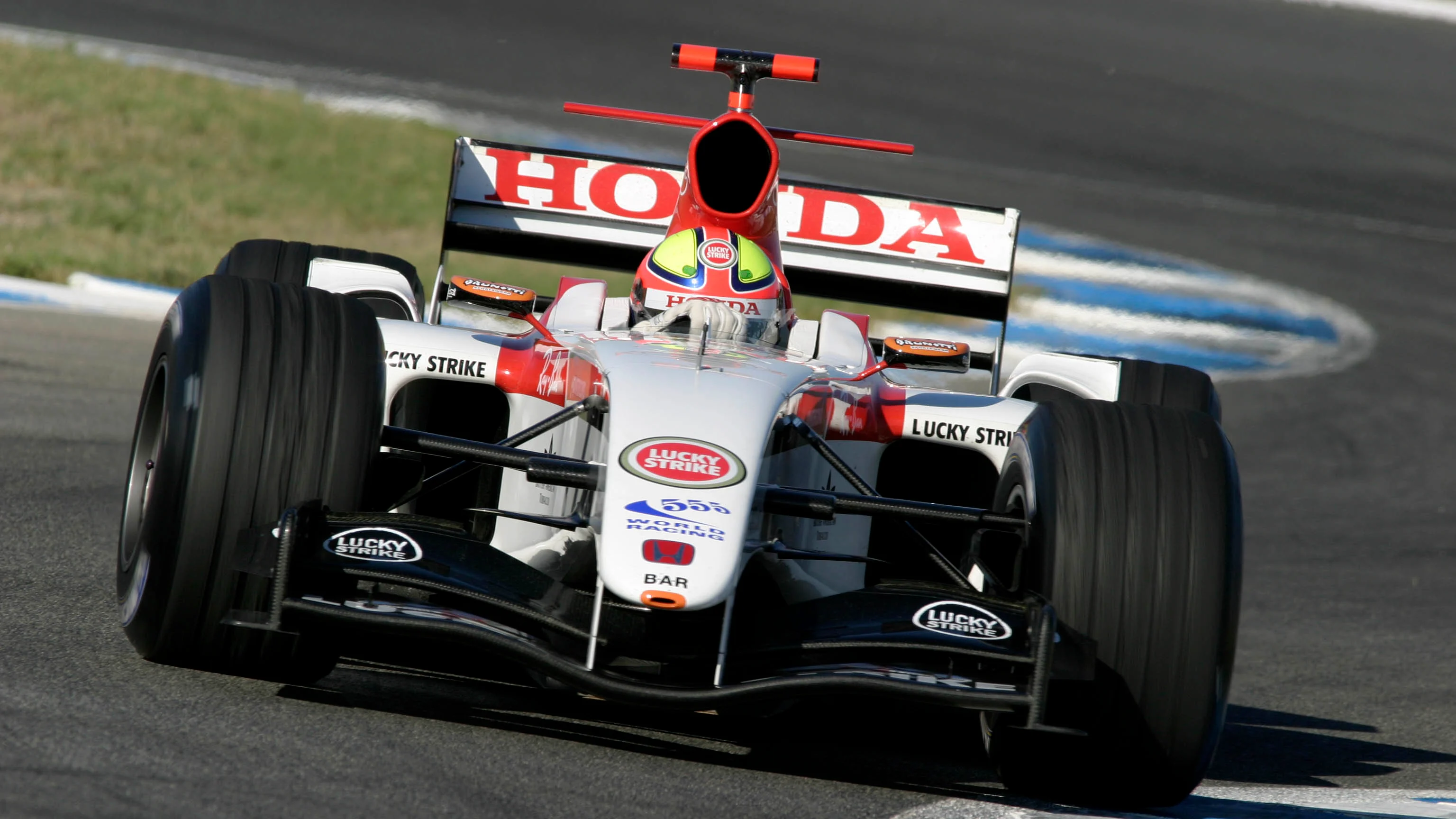 Bernoldi added one more chapter to his F1 story with a test role at BAR-Honda
“I also had a big crash on an oval when the suspension failed, which broke my hand, and I had to go through three surgeries. It meant I missed the last few races of the season and the beginning of the next year, so I was without a job. I lost a little bit of the momentum there.”
Bernoldi delivered another comeback part-way through 2009, making his final single-seater outings in Super Formula, before blending endurance competition with drives in the Stock Car Brasil series and eventually hanging up his helmet in 2015, while in his late-30s.
Now 47, Bernoldi has passed the motorsport baton onto his son, Bernardo, or ‘Beco’, who recently appeared in the UAE F4 Championship and is scheduled to contest the Italian F4 Championship and the E4 Championship through 2026.
Reflecting on the past, present and future, Bernoldi signs off: “At the end of the day, racing in England, my time in Austria, Helmut Marko, Arrows in F1, everything, taught me many, many lessons to carry in my life, like being disciplined, how to push yourself, which I try to pass on to my kids, and to Beco.
“I could have raced at a high level for a few more years, but the prime of my career was already behind me. I don’t regret anything. Of course, I also dreamed of being a World Champion one day. But, like my father used to say to me, ‘if’ doesn’t exist… if, if, if and everybody’s a World Champion!”
 RACE TICKETS – AUSTRALIADon’t miss your chance to experience a blockbuster season-opener in Melbourne…BOOK NOW